1234
5678
// welcome
Detroit
Developers
Developers
monthly meetup
detroitdevelopers.com
⑂ main
● welcome.md
1 / 42
Detroit, MI
1234
5678
// thank you to our sponsor

RIVET
Construction Labor Planning for increased Productivity
We're hiring →
rivet.work/careers
rivet.work/careers
⑂ main
● sponsors.md
2 / 42
rivet.work
1234
5678
// your organizers

Phil Borel
Organizer
philborel.com
detroitdevelopers.com

Louis Gelinas
Organizer
linkedin.com/in/louis-gelinas
⑂ main
● organizers.md
3 / 42
Detroit, MI
1234
5678
// intro
Agentic Software
Development
Development
Advanced Practitioner's Guide
Phil Borel · RIVET · Detroit Developers · April 2026
⑂ main
● title.md
4 / 42
Detroit, MI
1234
5678
// intro
"A working case study.
Not a success story.
Yet."
Not a success story.
Yet."
⑂ main
● framing.md
5 / 42
Detroit, MI
1234
5678
// intro
What does 3x even mean?
- Vibes — execs feel like we shipped 3x the value
- Metrics — DORA numbers, PR throughput, features shipped
- Outcomes — users get more value more quickly
- All three matter. None is sufficient alone.
- Risk: 10x some metrics while seeing modest gains on outcomes
⑂ main
● what-is-3x.md
6 / 42
Detroit, MI
1234
5678
// intro
AI compresses the 20%. The hard part is the 80%.
- Writing code was always 20% of the work
- Testing, refining, validating — always 80%
- 10x on 20% doesn't get you to 3x overall
- This talk is about the 80%: spec quality, review process, architectural discipline
⑂ main
● the-20-percent.md
7 / 42
Detroit, MI
1234
5678
// act-1: ai is an amplifier
Act 1
AI is an
Amplifier
Amplifier
⑂ main
● act-1.md
8 / 42
Detroit, MI
1234
5678
// act-1: ai is an amplifier
AI is an amplifier.
- DORA 2025 — 5,000 professionals, 100+ hours qualitative research
- Magnifies the strengths of high-performing orgs
- Magnifies the dysfunctions of struggling ones
- 92% of devs use AI monthly — but outcomes are splitting
- High-performing orgs: 50% fewer customer incidents. Struggling orgs: 2× more. Same tools.
- "AI is moving organizations in different directions." — Laura Tacho, DX
⑂ main
● dora.md
9 / 42
Detroit, MI
1234
5678
// act-1: ai is an amplifier
What is AI about to amplify at your org?
- Good architecture → great architecture
- Bad architecture → messy, sprawling code generated at scale
- Good specs → accurate, testable implementations
- Vague specs → confidently wrong code that passes tests you didn't write
- Consistent patterns → idiomatic output on the first try
- Three divergent patterns → agent picks whichever it saw last, tech debt at speed
⑂ main
● amplifier.md
10 / 42
Detroit, MI
1234
5678
// act-1: ai is an amplifier
The velocity gains were temporary. The tech debt was permanent.
- CMU — 807 repos after Cursor adoption
- 281% increase in lines added, month one
- Month two: velocity gains gone, back to baseline
- Static analysis warnings +30%, code complexity +41% — permanently
- Complexity increase → ~65% drop in future velocity
- "Slop creep" — Boris Tane: individually reasonable, collectively destructive
⑂ main
● cautionary-data.md
11 / 42
Detroit, MI
1234
5678
// act-1: ai is an amplifier
Taste × Discipline × Leverage — multiplicative, not additive
- Taste — when generation is free, knowing what's worth generating is the scarce skill
- Discipline — specs before prompts, tests before shipping, reviews before merging
- Teams skipping discipline are reporting production disasters — Cortex 2026: incidents/PR up 23.5%
- Leverage — small teams, stacked PRs, agent orchestration, design engineers eliminating handoffs
⑂ main
● framework.md
12 / 42
Detroit, MI
1234
5678
// act-1: ai is an amplifier
This isn't theoretical.
- Amazon retail: spike in outages from AI-assisted changes → senior sign-off mandate for junior/mid engineers
- Anthropic's own website shipped a basic regression affecting every paying customer — 80%+ generated with Claude Code
- "I don't think we're even trading this off to move faster. I think we're moving at a normal pace." — OpenCode CEO
- Discipline is what separates teams that sustain from teams that crash
⑂ main
● reality-check.md
13 / 42
Detroit, MI
1234
5678
// act-1: ai is an amplifier
Best practices matter more with AI, not less.
⑂ main
● implication.md
14 / 42
Detroit, MI
1234
5678
// act-2: code quality is harness quality
Act 2
Code Quality is
Harness Quality
Harness Quality
⑂ main
● act-2.md
15 / 42
Detroit, MI
1234
5678
// act-2: code quality is harness quality
The bottleneck is the environment, not the model.
- OpenAI harness engineering: 3 engineers (later 7), ~1M lines, 1,500 PRs, zero hand-written code
- When the agent fails: "what capability is missing, and how do we make it legible and enforceable?"
- Failures are harness problems, not prompt problems
⑂ main
● environment.md
16 / 42
Detroit, MI
1234
5678
// act-2: code quality is harness quality
Refactoring is AI infrastructure — not cleanup.
⑂ main
● refactoring.md
17 / 42
Detroit, MI
1234
5678
// act-2: code quality is harness quality
RIVET: backend layered architecture
- Three divergent patterns → one: DB → Model → Repository → Service → Controller → Router
- Each layer: one clear responsibility, one clear contract with adjacent layers
- Defense-in-depth permissions at router, controller, and service levels
- Agent can't accidentally create an unprotected endpoint — the pattern enforces security
- Maps closely to OpenAI's enforced architecture. Not a coincidence.
⑂ main
● backend.md
18 / 42
Detroit, MI
1234
5678
// act-2: code quality is harness quality
RIVET: frontend state migration
- Legacy: load full app state upfront, apply incremental updates
- Problem: sluggish loads, global state — hard for humans and agents
- New: fetch data when and where needed, local component state, explicit dependencies
- Smaller blast radius per change — agent can work in one area without breaking adjacent ones
- Two goals: better UX for users + a codebase Claude can work in safely
⑂ main
● frontend.md
19 / 42
Detroit, MI
1234
5678
// act-2: code quality is harness quality
Mechanical enforcement > documentation
- OpenAI: encoded architectural rules as custom linters, not prose
- Linter error messages written as remediation instructions — every violation teaches the agent how to fix it
- Rules that feel heavy in human-first workflows become multipliers with agents — apply everywhere at once
- Documentation drifts. Lint rules don't.
⑂ main
● enforcement.md
20 / 42
Detroit, MI
1234
5678
// act-2: code quality is harness quality
Rules without refactoring are aspirations, not enforcement.
⑂ main
● caveat.md
21 / 42
Detroit, MI
1234
5678
// act-3: context engineering
Act 3
Context
Engineering
Engineering
⑂ main
● act-3.md
22 / 42
Detroit, MI
1234
5678
// act-3: context engineering
From prompting to context engineering
- Prompting — telling an AI what to do in a single interaction
- Context engineering — building the persistent, structured context that makes an agent reliably useful over time, across a whole team
- CLAUDE.md is where this starts — but the real harness extends into linters, tests, CI gates, observability, and automated maintenance
⑂ main
● context-engineering.md
23 / 42
Detroit, MI
1234
5678
// act-3: context engineering
CLAUDE.md: map, not encyclopedia
- A large instruction file actively degrades agent performance — crowds out the task
- When everything is "important," agents fall back to local pattern-matching
- ~100 lines max — structured as a map with pointers to deeper sources of truth
- Checked into the repo. Reviewed in PRs. Evolved alongside the codebase.
- Team artifact, not personal config
⑂ main
● claude-md.md
24 / 42
Detroit, MI
1234
5678
// act-3: context engineering
Rules and hooks
- Rules — constraints the agent follows automatically: coding standards, naming patterns, always/never
- Hooks — automated actions triggered by agent behavior: linters after generation, auto-formatting
- Together: continuous mechanical enforcement, everywhere at once, without human attention
- At RIVET: rules in progress, hooks on the roadmap
⑂ main
● rules-hooks.md
25 / 42
Detroit, MI
1234
5678
// act-3: context engineering
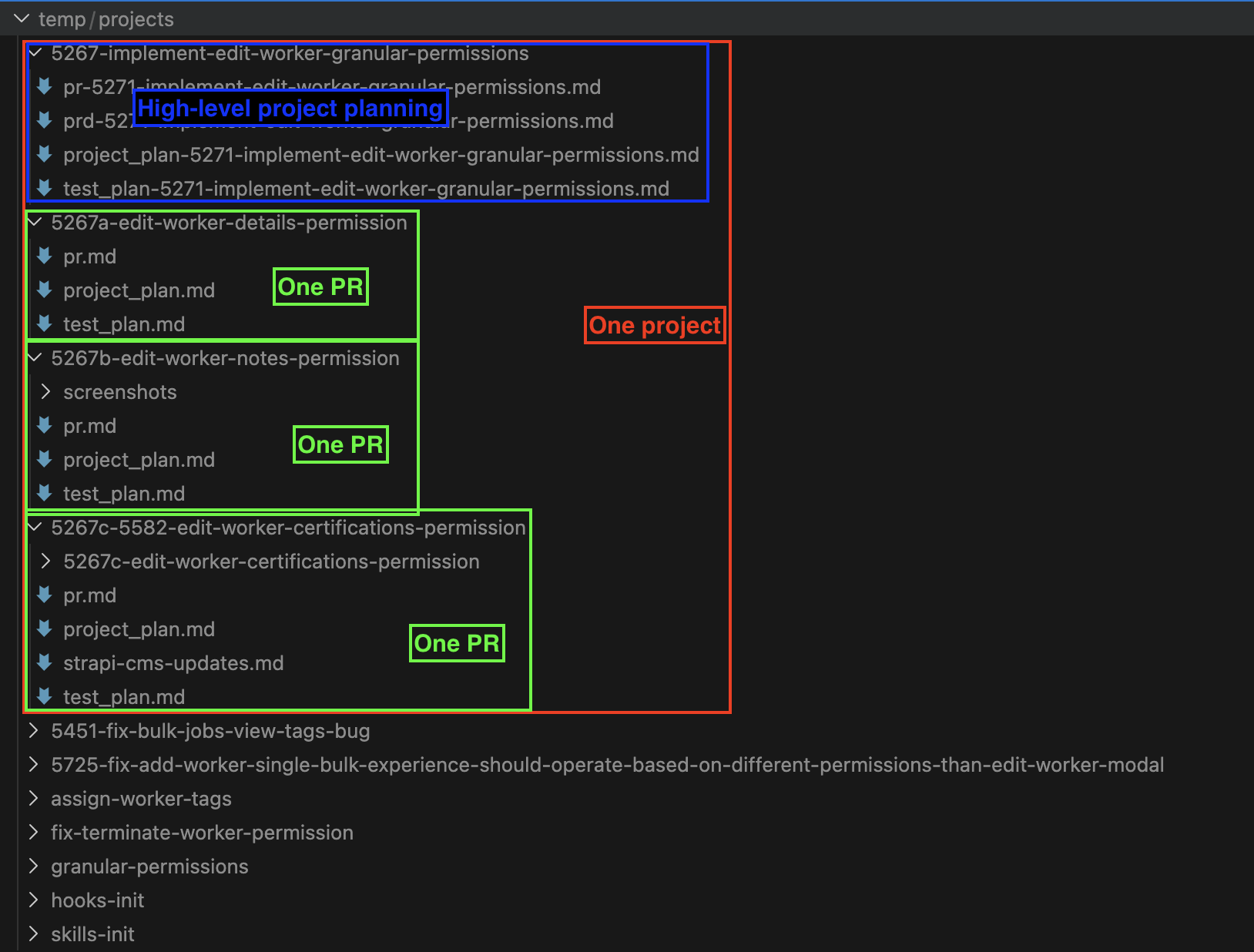
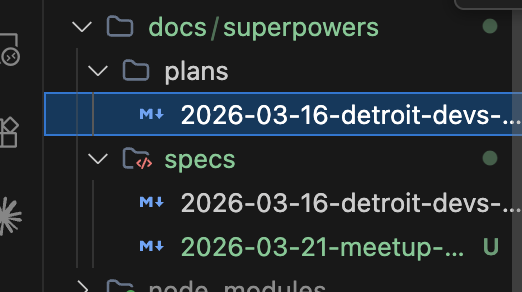
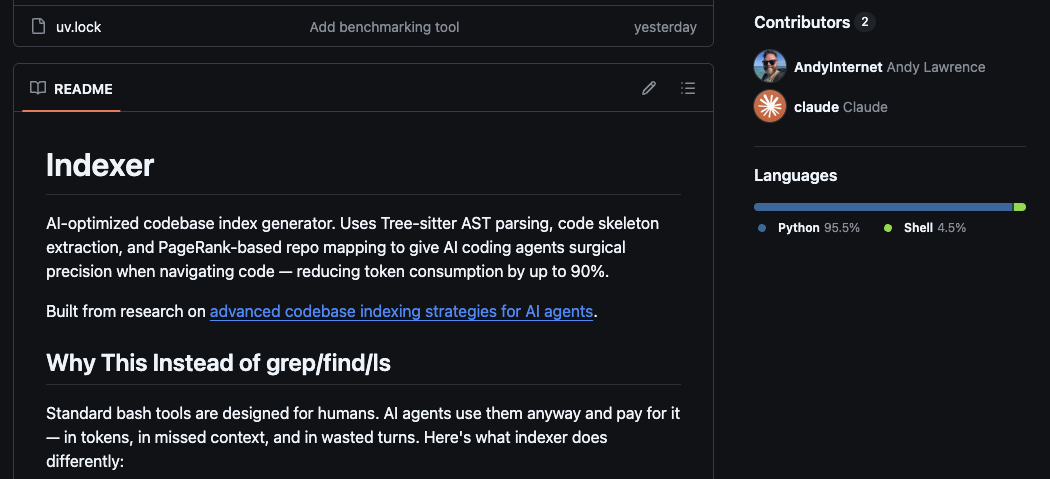
PILRs: context that accumulates
- Persistent Indexed Learning Repos — structured knowledge bases the agent can reference
- index.json maps topics → documentation files. Agent loads what it needs, not everything.
- PILRs grow as the agent works — organic accumulation vs. upfront documentation
- Goal: "generic coding assistant" → "specialist who knows how our platform is built"
- Addresses the cold-start problem. You don't have to document everything upfront.
⑂ main
● pilrs.md
26 / 42
Detroit, MI
1234
5678
// act-3: context engineering
github.com/obra/superpowers
⑂ main
● pilrs-examples.md
27 / 42
Detroit, MI
1234
5678
// act-3: context engineering
PILRs at Signal Advisors
- MCP server loads PRDs & tech specs as context for agents working across multiple code repos
- Agents get the right domain knowledge without it living in any single repo
- Same pattern, different delivery mechanism — the PILR principle scales beyond local files
⑂ main
● pilrs-signal.md
28 / 42
Detroit, MI
1234
5678
// act-3: context engineering
github.com/AndyInternet/indexer
⑂ main
● pilrs-indexer.md
29 / 42
Detroit, MI
1234
5678
// act-3: context engineering
Skills: making agent usage programmable
- Reusable packaged workflows — complex multi-step processes become a single command
- At RIVET: /review-pr, /implement, /update-project-docs, bug-fix skills, PILR builders, commit rewriter
- Skills are team assets: versioned, shared, improved over time
- This is where the promises of GenAI for coding start to make real sense
⑂ main
● skills.md
30 / 42
Detroit, MI
1234
5678
// act-3: context engineering
The /implement skill
- PRD + Tech Spec → Project Plan (reviewed before code is written)
- Project Plan → Test Plan: automated tests + manual testing steps
- Agent writes code, executes test plan via cURL + Claude Chrome Extension
- Screenshots → gitignored folder → referenced in pr.md
- Honest: ~25% success rate on screenshots. Worth it anyway.
- Start with /review-pr or /commit — not /implement
⑂ main
● implement-skill.md
31 / 42
Detroit, MI
1234
5678
// act-3: context engineering
The support bot agent: "re-purchased half a developer"
- Before: ticket → ~20 min understanding + ~20 min finding the code + fix time
- Now: agent triages, reproduces, proposes fix or surfaces what the engineer needs
- Uses a PILR — persistent directory of previously solved problems + index
- Result: support backlog per two-week shift dropped significantly
- Doesn't solve novel architectural bugs — good at "we've seen this pattern before"
- Why it works: the harness came first. Without CLAUDE.md, the agent just guesses.
⑂ main
● support-bot.md
32 / 42
Detroit, MI
1234
5678
// act-3: context engineering
Spec-Driven Development
- Specify → Plan → Tasks → Implement
- Expanded the "safe delegation window" from 10–20 minute tasks to multi-hour feature delivery
- The harness makes the agent reliable. SDD makes the work product predictable.
- Forces hard thinking to happen before implementation, not during it
- Claude Code's plan mode is built for this workflow
⑂ main
● sdd.md
33 / 42
Detroit, MI
1234
5678
// act-3: context engineering
4-layer review
- 1. Architectural review — human, before code is written
- 2. Automated review — /review-pr skill, SonarCloud, Copilot review, linting, tests (all in CI)
- 3. Human code review + manual QA — focused on the feature, based on test steps in the PR
- 4. Full-app UAT/regression — end of every sprint (working toward replacing with Playwright)
- Unsolved: without ephemeral envs, reviewers contend for shared test servers — gets worse as PR volume increases
⑂ main
● review.md
34 / 42
Detroit, MI
1234
5678
// act-4: multi-agent reality check
Act 4
Multi-Agent
Reality Check
Reality Check
⑂ main
● act-4.md
35 / 42
Detroit, MI
1234
5678
// act-4: multi-agent reality check
The promise: a fleet of AI collaborators
- One agent orchestrates many — background agents on separate branches in parallel
- An engineer manages a fleet, not a single assistant
- Cursor is doing this. Ramp. Stripe. Large AI-native companies.
- Orchestration platforms emerging: Coder and others — provisioning environments, coordinating agents across a codebase
⑂ main
● the-promise.md
36 / 42
Detroit, MI
1234
5678
// act-4: multi-agent reality check
Where we actually are
- ✓ GitHub Copilot cloud agents
- ✓ Support bot agent — and it's working
- ~ Running 1–3 local tasks at once — sometimes
- "I've read sensational claims from Ramp and Stripe. We don't have things tuned to that level."
- "I haven't figured out how to multiplex my brain yet."
⑂ main
● where-we-are.md
37 / 42
Detroit, MI
1234
5678
// act-4: multi-agent reality check
What actually happened when I tried
- Context debt: you need rich structured context in place — we weren't there yet
- Review bottleneck: more agents = more PRs = worse pile-up
- Cognitive load: managing multiple agent threads is a different skill, not just more of the same
- Not that the tools don't work — we hadn't earned the right to use them yet
⑂ main
● what-happened.md
38 / 42
Detroit, MI
1234
5678
// act-4: multi-agent reality check
We're in the j-curve. The dip before the improvement.
- The things that are working are working because of harness investment
- Multi-agent nirvana requires the full harness first — we're not done building it
- This is a living experiment, not a solved problem
- Anyone who tells you they've fully solved this is either Cursor or not telling the whole story
⑂ main
● honest-summary.md
39 / 42
Detroit, MI
1234
5678
// close
Monday morning
- Write a CLAUDE.md for one repo: tech stack, architecture in two paragraphs, three things you wish every new engineer knew
- Try one skill — start simple: /review-pr or /commit, not /implement
- Identify one refactor that would make your codebase more agent-navigable — put it on the roadmap
- None of this requires a BHAG or an executive mandate
⑂ main
● monday.md
40 / 42
Detroit, MI
1234
5678
// close
Further reading
- DORA AI Capabilities Model (2025) — google.com
- Harness Engineering — OpenAI (Feb 2026)
- Building an Elite AI Engineering Culture — CJ Roth (Feb 2026)
- Are AI Agents Actually Slowing Us Down? — Pragmatic Engineer (Mar 2026)
- Speed at the Cost of Quality — Carnegie Mellon (2026)
- Full blog post with all references: detroitdevelopers.com
- Superpowers plugin for Claude Code: github.com/obra/superpowers
detroitdevelopers.com/blog/agentic-coding-advanced-guide/
⑂ main
● resources.md
41 / 42
Detroit, MI
1234
5678
// close
Questions
detroitdevelopers.com
⑂ main
● questions.md
42 / 42
Detroit, MI